
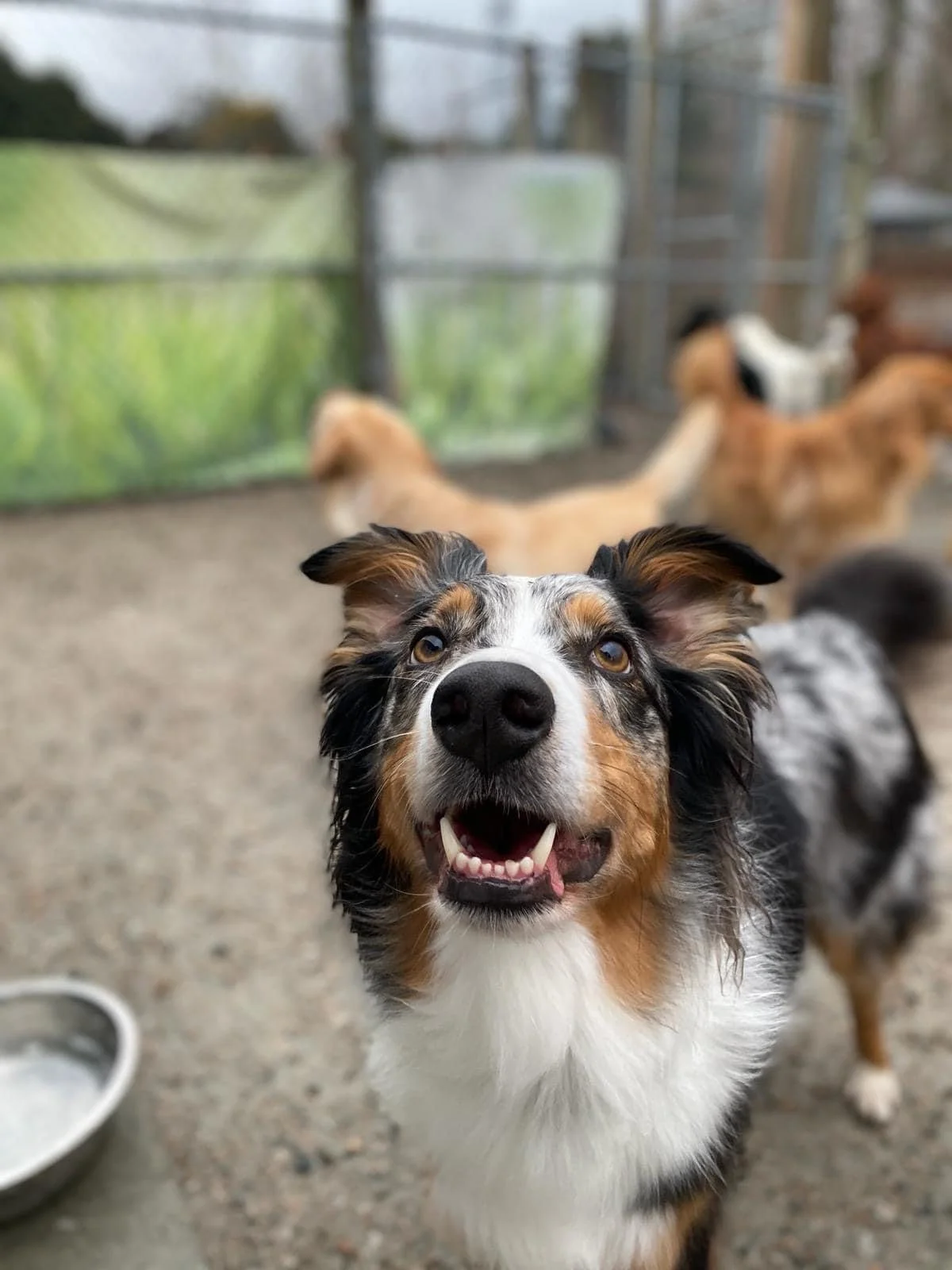
Help Your Dog Love Life While You Are on Vacation
Planning a long trip is exciting, but it can also bring up a lot of questions about your dog. How long should they stay in boarding? Will they miss you too much? How do you keep their routine steady so they feel safe and relaxed?
When you plan their boarding stay with the same care you put into your own travel plans, your dog can have a great time too. Picking the right boarding length, building a calm daily routine, and easing them into the new space helps reduce stress for both of you.
Many pet parents in Port Coquitlam worry about things like separation anxiety, medical needs, senior dog comfort, or a first-time away from home. With thoughtful planning, those worries can turn into confidence. At Good Dog, our experienced trainers shape each dog’s stay with enrichment, low-stress handling, and a focus on safety so dogs of all ages and temperaments can relax while their people are on vacation.
How Long Should Your Dog Stay in Boarding?
There is no one-size-fits-all answer to how long a boarding stay should be. Your dog’s age, personality, and history all play a role.
Puppies, adolescents, seniors, and rescue dogs often need different adjustment times. For example:
Puppies may need shorter first-time stays with lots of rest and routine
High-energy adolescents often do well with more activity and clear structure
Seniors may need extra quiet time, softer surfaces, and gentle handling
Rescue dogs might benefit from slower introductions and more one-on-one support
Think about the length of your trip too. For a quick weekend away, one short boarding stay is usually easier on your dog than shuffling between multiple homes. For a longer vacation, many dogs settle nicely once they get into a routine, so one consistent stay at a trusted Port Coquitlam facility is often kinder than several changes or rotating pet sitters.
Your schedule matters as well. Try to:
Avoid rushed, emotional goodbyes at drop-off
Pick times of day when your dog is usually calm, like after a walk or breakfast
Plan pick-up when you are not racing to your next event, so you can focus fully on your dog
A calm, predictable start and end to the stay helps your dog feel safe and makes re-entry at home smoother.
Trial Nights and Daycare-to-Boarding Transitions
If your dog has never stayed in boarding, or if they are shy, sensitive, or older, trial visits can make a big difference.
Trial daycare days are a simple first step. One or two half or full days at Good Dog help your dog:
Get used to the building, smells, and sounds
Meet our team and start to trust familiar faces
Try out playgroups or quiet enrichment at their own pace
Once daycare feels comfortable, we often suggest one or two trial boarding nights. Think of these as mini vacations for your dog. Short practice stays help them learn that:
You always come back
Sleeping in a new place can still feel safe
Staff will notice their sleep habits, appetite, and stress signals
Daycare-to-boarding transitions work well for many dogs. They come in for their normal daycare day, enjoy their usual activities, then stay overnight in the same environment with people they already know. Our experienced trainers watch closely and adjust enrichment, playtime, and quiet breaks so the routine feels familiar and not overwhelming.
Building the Perfect Daily Routine for a Relaxed Stay
A good boarding stay is more than just a place to sleep. The daily flow matters, especially for longer trips.
At Good Dog, we tailor each dog’s routine to their age, breed, and energy. That might look like:
Active play and sniffing walks for energetic dogs
Shorter, gentler sessions for seniors or brachycephalic breeds
Calm enrichment like puzzle feeders or scent games for dogs that prefer quieter time
Social needs are just as important as physical activity. Some dogs are social butterflies who love supervised small-group play. Others do better with:
One-on-one time with staff
Structured enrichment away from busy playgroups
Gradual introductions instead of big groups
Sleep and decompression are key, especially during vacation dog boarding in Port Coquitlam when stays can be longer. We focus on:
Quiet, low-stress sleeping areas
Consistent bedtimes and wake-up routines
Built-in rest breaks during the day so dogs do not become overtired
When dogs get a balance of activity, mental work, and rest, they handle longer stays with much more ease.
Medication, Feeding, and Comfort Items That Truly Help
Planning ahead for medication and feeding keeps your dog’s body feeling steady, which helps their mind relax too.
For medication, it helps if you:
Provide clear written instructions that match your home routine
Label each medication with your dog’s name and dosage
Share any special directions, like giving pills with food or at a set time
Provide your vet’s contact details and any recent health updates
Feeding routines should stay as close as possible to what your dog gets at home. Sudden changes in food can upset their stomach during an already new experience. You can:
Bring their regular food in measured portions
Note feeding times and any food allergies or sensitivities
Include approved supplements and treats they are used to
Comfort items can be powerful, as long as they are safe. Helpful things to pack:
A familiar blanket or bedding that smells like home
A worn T-shirt you have slept in
One or two favourite toys
Things to skip:
Unsafe chews that can break or splinter
Irreplaceable items you would be heartbroken to lose
Large piles of toys that may cause tension in group areas
A few well-chosen items can be grounding without creating clutter or risk.
Choosing the Right Port Coquitlam Boarding Partner
Not all boarding options are the same, especially for longer trips. When you are looking for vacation dog boarding in Port Coquitlam, it helps to ask clear questions.
Good topics to cover:
Staff training and experience, especially with different temperaments
How dogs are supervised indoors and outdoors
What enrichment is part of the daily routine
Vaccination and health policies
How they support nervous, reactive, or special-needs dogs
Long stays are easier on dogs when the environment is calm and structured instead of loud and chaotic. Enrichment-based, low-stress care means:
Predictable routines that reduce worry
Mental stimulation through sniffing, problem solving, and gentle training
Handling that respects each dog’s personal space and comfort level
At Good Dog, our experienced trainers oversee care plans, trial nights, medication schedules, and daily routines so each dog gets support that fits their age, health, and personality. Care is personalized so your dog can feel safe, have fun, and rest well while you are away.
Give Your Dog a Stress-Free Stay While You Travel
When you are planning time away, we make sure your dog enjoys a safe, engaging break of their own. Our experienced team provides structure, play, and rest so your dog comes home happy, not stressed. Learn more about how our vacation dog boarding in Port Coquitlam can fit your travel plans and your dog’s unique needs. Reach out to Good Dog today to reserve your spot before spaces fill up.